
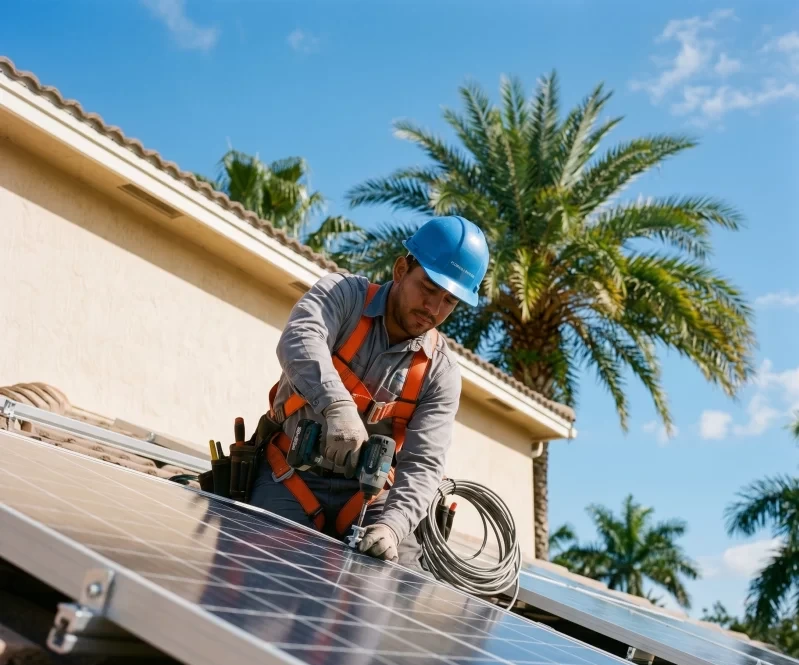
South Florida gets some of the best sunshine in the country — and with rising energy bills and an active storm season, more luxury homeowners in North Miami and the surrounding area are turning to solar. If you’re considering it, here’s a clear, complete guide to how residential solar installation actually works.
How residential solar works
A home solar system has three core parts: the panels that capture sunlight, an inverter that converts it into usable electricity for your home, and (optionally but highly recommended in Florida) a battery that stores energy for use at night or during an outage. Any excess energy your panels produce can flow back to the grid, and modern systems are monitored from your phone.
The installation process, step by step
- 1. Assessment & design. A licensed installer evaluates your roof, orientation, shading, and electrical panel, then designs a system sized to your home’s real energy use.
- 2. Permits & approvals. Solar in Miami-Dade requires permits and utility approval. A good contractor handles all of this paperwork for you.
- 3. Installation. Mounting, panels, inverter, and wiring are installed — typically over one to a few days depending on system size.
- 4. Inspection. The local building department inspects the work to confirm it meets code.
- 5. Activation. Once the utility gives the green light, your system is switched on and begins producing.
What matters most in South Florida
Our climate makes a few things especially important:
- Hurricane-rated mounting. Panels and racking must be engineered and installed to withstand high winds — this is non-negotiable in South Florida.
- Roof condition. If your roof is near the end of its life, it’s usually best to address it before installing panels.
- Battery backup. Solar alone won’t power your home during a grid outage unless you have a battery. In storm season, a battery is what keeps the lights, AC, and fridge running when the power goes down.
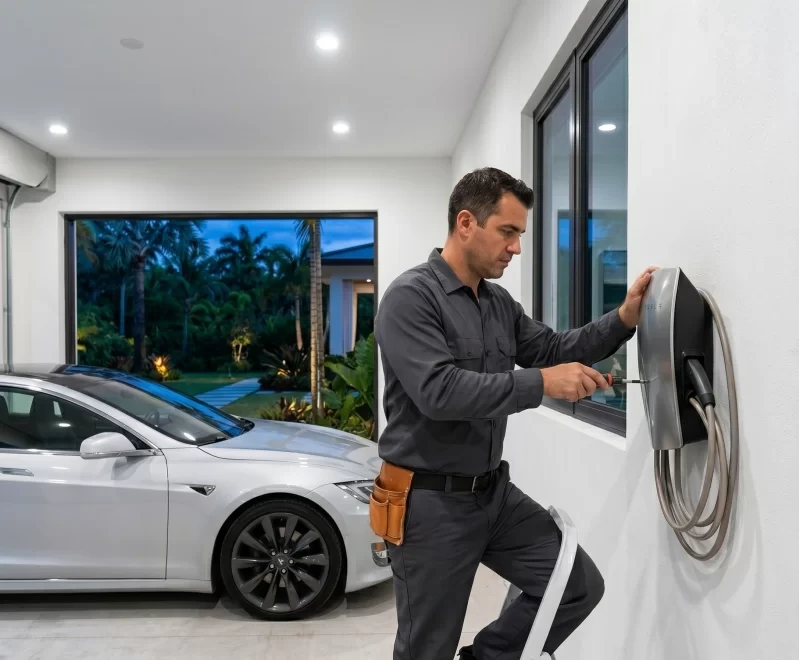
- Panel capacity. Your electrical panel needs the capacity to integrate solar (and a battery, and possibly an EV charger) safely — sometimes a panel upgrade is part of the project.
Costs and incentives
Pricing depends on system size, battery storage, and your roof. Incentives and utility net-metering policies can offset a meaningful portion of the cost, but these programs change over time — so it’s worth confirming exactly what applies at the time you install. A reputable installer will walk you through the current numbers honestly, with no pressure.
Thinking about solar in North Miami or South Florida?
At B-GELEC, our licensed electricians design and install high-performance solar and battery backup systems engineered for South Florida’s energy demands and storm season — integrated cleanly with the rest of your home’s electrical system. We’ll assess your home and give you a clear, honest plan.
Call us at (954) 501-4172 or request your free consultation at b-gelec.us.


Leave A Comment